Timegrip was founded in 1995 in Denmark by Henrik Baasch. With it’s extensive history in workforce management and it’s fast growing operations within North-Western Europe, Timegrip saw the need for a strategic partnership.
Timegrip provides a complete, all-round workforce management solution, which helps companies with digitalization. By providing employee scheduling, time & attendance and HR administration, Timegrip serves companies ranging from the retail, hospitality and leisure sector to the health, banking & finance and logistics & transport sectors in more than 25 countries across the world.
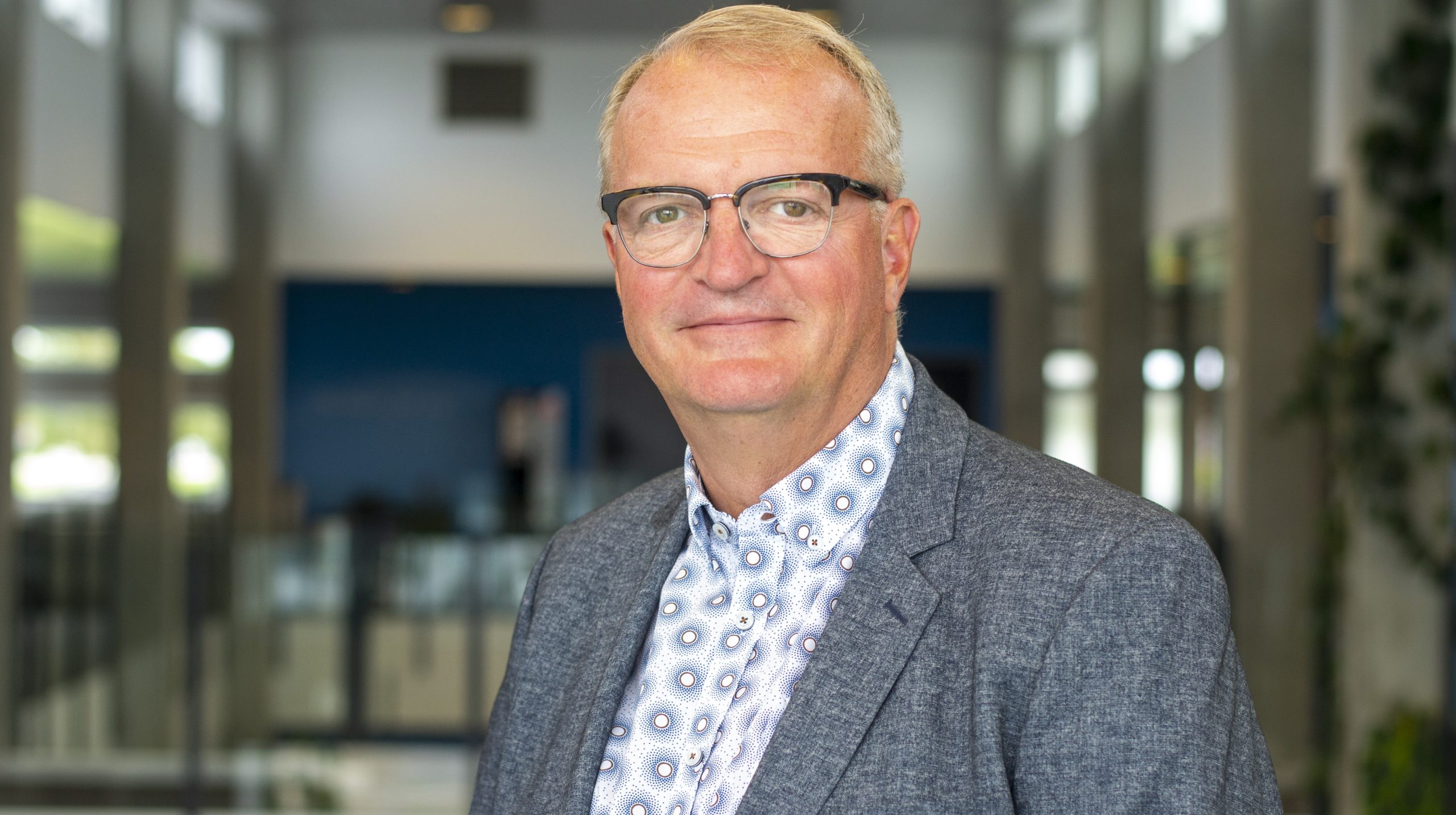
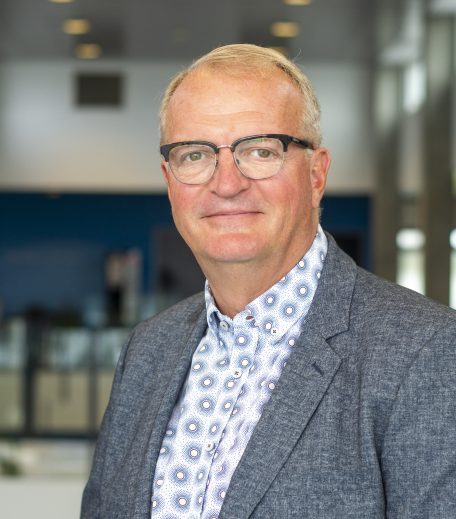
“As Timegrip arrived on the scene in the early 90s, with the first spreadsheets in its pocket, workforce legislation in Denmark was undergoing changes. Shops started to open longer and on Saturdays. This also meant that, if you did it in the right way, you could save money as a retailer if you put people in the right way and at that time. This was the start of a longstanding collaboration with Denmark’s service sector.”, Clausager mentions.
The increasing complexity of labor regulations and the need to accurately forecast and plan the workforce is an ongoing struggle for many large companies. How does the Timegrip solution tackle this? What solution does it offer and what support does it provide?
“The Timegrip solution helps companies optimize processes, streamline administration and reduce expenses. However, when it comes to tackling the complexity of increasing labor regulations, there’s more to it.”, Clausager explains:
“With our solution we encapsulate these complexities by offering a complete and efficient solution. We have been specific about what we’re trying to achieve: we want to integrate employee scheduling with time and attendance. And on the other hand, we provide HR-administration because you need information on your employees and on workforce agreements. Not only do these agreements cover hours, but also leave and holidays.
What also helps encapsulate those complexities is the fact that we have maintained and thoroughly developed an all-encompassing solution that contains everything that is needed for workforce administration. So we don’t develop customized solutions but we do continuously tailor them to fit the wants and needs of our clients.”, Clausager adds.
An All-In-One solution for everyone, everywhere.
The all-encompassing solution that Timegrip offers is developed with continuous evaluation and collaboration with their clients.
“Our strength is that we really take the time to listen to our customers and we implement changes suggested by our customers, but when we do this we adjust these changes across the entire, unified platform so that its available for everyone, everywhere. We have a major release every quarter, with new and improved functionalities.”
Not only does this benefit Timegrip’s clients, it also benefits their plans for internationalization, specifically in terms of localization.
“We provide one solution for everyone, which means that not everyone needs everything, but they use what they need. We make sure it’s all there, which in itself makes it easier to localize in different countries when internationalizing. Nordic agreements, laws, and obligations are different. In any case, if you can make it work, that would be beneficial, especially if you can localize the solution to other countries where perhaps the laws, rules, and obligations are less regulated. As a result, handling localization in the Nordics has been an excellent starting point for us. This is because the complexity there is higher than in other countries and we’ve already updated our solution to fit their legislation. We notice that no major changes need to be made to adhere to the legislation of other countries. So we actually have a significant advantage in having started in the Nordics.”
What have you experienced so far in terms of internationalization?
“The company has grown gradually, first of all in Denmark because that’s where we started, and as some of the retail chains started to become more international, we grew together with them in different countries. Especially in Sweden and Norway we have partnerships there and they help promote Timegrip locally and take care of implementation. But mainly we expanded and moved abroad with our Danish customers.”
How does the Timegrip solution distinguish itself from its competitors?
“If we look at our competitors, the solution on the surface looks similar. However, where we make a difference is the eye for detail we have in terms of workforce agreements. We offer a comprehensive and remote platform for workforce management that works for both employees and managers alike. All information regarding time and attendance is registered and calculated accordingly, so there is no need for spreadsheets or post-adjustments. As part of our development efforts, the main focus has been on becoming more mobile. This is how we really distinguish ourselves from the rest. Additionally, we differentiate ourselves through our BI module, where we create smart overviews and drill-downs to help business leaders take decisions and implement sensible changes.
The labor market was rather stressed for the past 2 years. How did it apply to Timegrip’s solution?
“The circumstances did indeed affect the business. On the one hand, it affected the businesses we work with because their employees were placed on salary compensation, which meant we lost some revenue. On the other hand, we actually grew during the pandemic despite the pressure on the leisure and hospitality sectors. This is mainly due to that we had other customers in the retail and ecommerce sector that grew in that period.”
How has Timegrip gained such a strong market position? What are the main accomplishments?
“The biggest part of this success is being the first mover.”
And indeed, with more than 28 years of experience, Timegrip was the first to enter the Danish market with its one-of-a-kind solution. As such, a first come first served principle can be applied here, since Timegrip was able to build strong fundamentals from the start without much external pressure from competitors.
“We were able to really develop our solution thoroughly and adapt and grow alongside technological developments. The solution evolved from a floppy disc that customers installed on their own systems to an on-premises solution that we hosted and updated for our customers, and now we are available in the cloud. So clients can simply log into the website or app and we host everything behind the scenes. With that being said, we always deliver the latest version.
However, what is just as important is staying close to the customer. We have created so-called ‘ERFA groups’, which facilitate the sharing of experiences from all of the sectors we are involved with. These groups come together annually to discuss the latest developments in our solution, but also to discuss legislation, optimization points and where they are today. This information is highly valuable for our solution to stay up-to-date and for us to succeed as a growing business.”
What do you think the partnership with Main will offer?
“Since we are a day-to-day business, we knew we needed a partnership and to be an active player in the consolidation of the market, and we actively sought one over the last three years. We believe that being a profitable business requires innovation and that, in turn, comes at a cost. We have grown fast over the years. However, the real question is have we grown enough to compete efficiently in the market in ten years time? Can we sustain growth for a longer period of time? That key aspect of sustainability and growth is why Main is so critical for us. Main can help us achieve our growth strategy. There is so much knowledge to be gained from everything that Main has done for the last 20 years. The new partnership between a day-to-day business and a strategic investor is a great cocktail and we know it’s the right move.
Looking ahead, we should maintain our focus on the service industry. In the Nordics alone we already have plenty of opportunities. If we were able to expand throughout the Nordics we would have quadrupled our business and on top of that comes the DACH-region and the Benelux. We have the languages ready and the legislation is all set. It’s simply a matter of having the right amount of resources and finding the right add-ons and partners to work with.”
What is your internationalization plan so far?
“We have an installation in Canada, but besides that we are not planning to expand outside of Europe any time soon. Some businesses want to be everywhere at the same time and if you try to be everything for everyone you can sometimes be nothing for anyone. At the moment, our main priority is being the most suitable and right partner for the Nordics region. Expansion within the Nordics, DACH and Benelux can accelerate quite quickly seeing what opportunities we have at the moment. However, we won’t rule out the possibility of expanding elsewhere. Since Main just recently opened up an office in Boston, this could be a great opportunity for us at some point in time.”
It’s a step-by-step process, right?
“Yes, but now that we’ve partnered with Main, we’ll get things done a lot faster. I could already tell that there is a great synergy here.” Clausager adds.
What are the most important pillars of your growth strategy?
“The two main pillars are organic growth and buy-and-build. We are already implementing an organic growth plan which we developed earlier and which focuses on the Nordics. If we look at our current situation, we have some up-selling to do and then we also have an opportunity to increase share-of-wallet with current customer-relations. For example, is it possible to get one of our retail-customers in other countries instead of Denmark? They have 5 stores in Denmark that we serve today, but 300 stores globally that we don’t serve – so far. In this way, a share-of-wallet model could be highly beneficial, and we should utilize the successful business cases we already have. So upselling, share of wallet, and also finding effective strategies for growth within Norway and Sweden as well as adding new logo’s to our portfolio. Ultimately, we want to grow as quickly and efficiently as possible without actually risking our integrity, customer-focus and innovation.”