Breaking into Private Equity with Tom Derks

  • 26-05-2026
  • Article
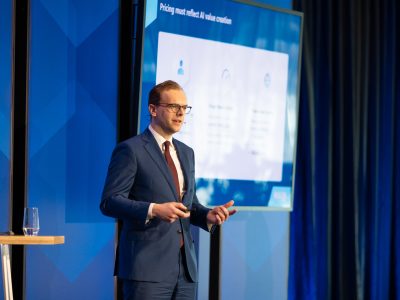
Wouter Vervoorn from the Financial Study Association Rotterdam (FSR) spoke with Tom Derks, Analyst at Main, about his path into PE, life inside the firm, and how Main looks at sector focus and AI.

This article was originally published on the Financial Study Association Rotterdam website.

Main Capital Partners, main sponsor of FSR, is a leading software investor headquartered in The Hague, managing private equity funds active in the Benelux, DACH, the Nordics, France and the United States. Since its founding in 2003, the firm has built a strong track record as one of Europe’s most active, consistent, and best-performing software investors, with approximately €7 billion in assets under management and a portfolio of around 60 software groups.

Main hires starters directly into its investment team and looks for ambitious, analytically strong and entrepreneurial individuals who thrive in a dynamic and fast-paced environment. I spoke with Tom Derks, Analyst at Main, about his path into PE, life inside the firm, and how Main looks at sector focus and AI.

Could you introduce yourself and tell us a little bit more about how you got into Private Equity?

Tom: I studied Economics and Business Economics at Erasmus University. “I wanted a broad education at a university that was highly regarded.” During my bachelor, we had a Business Valuation seminar, and I immediately enjoyed the analytical side of valuing companies. When it came to picking a master, a friend gave me good advice: if you don’t know exactly what you want yet but you do want some specialization, do Financial Economics. So, I did. It’s still a relatively broad programme, but it allows you to shape it more towards a specific direction, and that’s where I really started to build on that initial interest and focus more on PE and M&A. After five years of studying, I sat down with RD Recruitment, and the advice was simple: just start with an M&A internship. I then joined the Corporate Finance team at IBS Capital Allies. The pace and the role were exciting, you really think alongside the entrepreneur, but one thing stood out to me: “Once a deal closes, you hand the company over and move on.” You never actually build something together. That’s what pushed me towards private equity. I wanted to be part of the journey from A to B, not just the finish line. After IBS, I interned at Gilde Healthcare and then at Mentha Capital, specifically to gain more exposure to both transactions and portfolio work. What I noticed about myself along the way is that I enjoy going deep within a specific sector and really becoming a specialist in a market. After my third internship, I started looking for a full-time role and came across Main, which strongly aligns with that sector-focused approach. I moved from a general economics background into general PE, and ultimately into a more focused role in software PE. And even within software, you can keep specializing, whether it’s HR, healthcare, construction, invoicing, or financial software, each has its own dynamics and nuances.

What attracted you specifically to Main Capital?

Tom: During my orientation on job opportunities within private equity, Main quickly stood out to me. It’s one of the best-performing funds in Europe, with a very consistent track record and a highly active buy-and-build strategy. If you’re just starting out, that’s exactly what you want: a lot of exposure, a high deal flow, and a steep learning curve. The deep sector focus also really appealed to me. At Gilde Healthcare, I had already seen how specialization leads to much deeper market understanding, a strong network of experts and companies, and greater trust from entrepreneurs, and Main takes that even further. During the interview process, what stood out to me was the energy of the team and the overall dynamic within the firm. “The team is very young, there is a strong, ambitious atmosphere throughout the organization, and it really felt like an environment where you can learn a lot early on.”

How does Main position itself within the PE landscape?

Tom: Main is a specialized PE investor with an exclusive focus on B2B enterprise software, targeting companies that are already profitable, growing, and have strong management teams in place. What differentiates Main is its deep sector specialization combined with a highly data-driven approach. With over 20 years of experience in enterprise software, we work closely with management teams to drive sustainable growth, including international expansion, organic growth initiatives, and building market-leading software groups through buy-and-build. We invest through two core strategies: our flagship fund for more mature businesses, and our Foundation strategy for smaller, high-growth companies, both focused on accelerating the next phase of growth. I would describe Main as a strategic sparring partner, working alongside management teams to build international software leaders rather than just providing capital.

Main is deeply sector-focused on enterprise software. Why that depth rather than a broader approach?

Tom: Every PE-fund has its own strategy. The obvious trade-off of being sector-focused is that you limit yourself in where you can invest, but that’s exactly the point. The real advantage is that your knowledge of the software market keeps compounding over time. We’re active in roughly 15 countries, across 30+ verticals within software, and have built a network of more than 15,000 software companies globally. We’ve been doing this for over 20 years. So, when a founder decides to sell, we are often one of the first calls. Because we know the market so well, we can also move very quickly. We have a clear view on what we’re looking for and can tick the boxes fast. For entrepreneurs, that means speed and certainty, but also real expertise, as we have likely seen the same challenges many times before.

How involved does Main get with portfolio companies after an investment?

Tom: We see ourselves as strategic partners to the management team, not the ones taking over their seat. In practice, that means we’re closely involved, but always alongside management. As an Analyst in the Investment Team, you’re in frequent contact with management teams and involved across the full lifecycle, from initial deal sourcing, through the transaction, into the investment period with portfolio work, and ultimately the exit. We further support our companies on a daily basis through three teams. In addition to the Investment Team, we have Market Intelligence, which focuses on data and market research, and Performance Excellence, which acts as our in-house strategy consultants. Together, these teams work closely with management to drive value creation and growth. We also invest heavily in knowledge sharing. For example, we organize an annual CEO Day and CFO Day, where all portfolio company CEOs and CFOs come together in the Netherlands for strategy sessions, external speakers, and peer-to-peer learning.
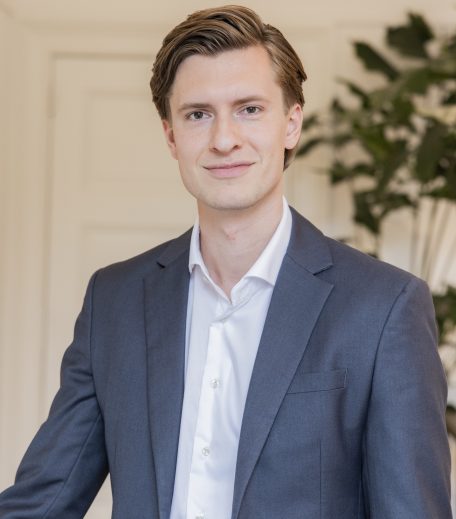
The team is very young, there is a strong, ambitious atmosphere throughout the organization, and it really felt like an environment where you can learn a lot early on.”

- Tom Derks, Analyst at Main
What does a typical week look like for you as an Analyst?

Tom: A typical week as an Analyst is very diverse, no two weeks are really the same. You get responsibility quite quickly. In my case, I’m already involved in five portfolio companies, working in deal teams with multiple seniority layers, from Associates and Investment Managers up to Directors and Partners. As an analyst, you’re involved in pretty much everything happening at your portfolio companies. That ranges from monthly and quarterly reporting, annual accounts, and organic growth projects with Performance Excellence, to add-on sourcing, supporting transactions, weekly commercial updates, board meetings, and eventually the exit process. You’re juggling quite a lot at once, so clear communication with the senior team is key. There’s also some natural specialization within the Investment Team. I happen to cover three of our HR-tech companies, so for example, I was at a large HR-tech event at the RAI yesterday with one of our directors, speaking with companies and staying close to the market. So overall, it’s a mix of deal work, portfolio support, and market exposure, which is exactly what makes the role dynamic and a typical week quite varied.

How would you describe the culture at Main?

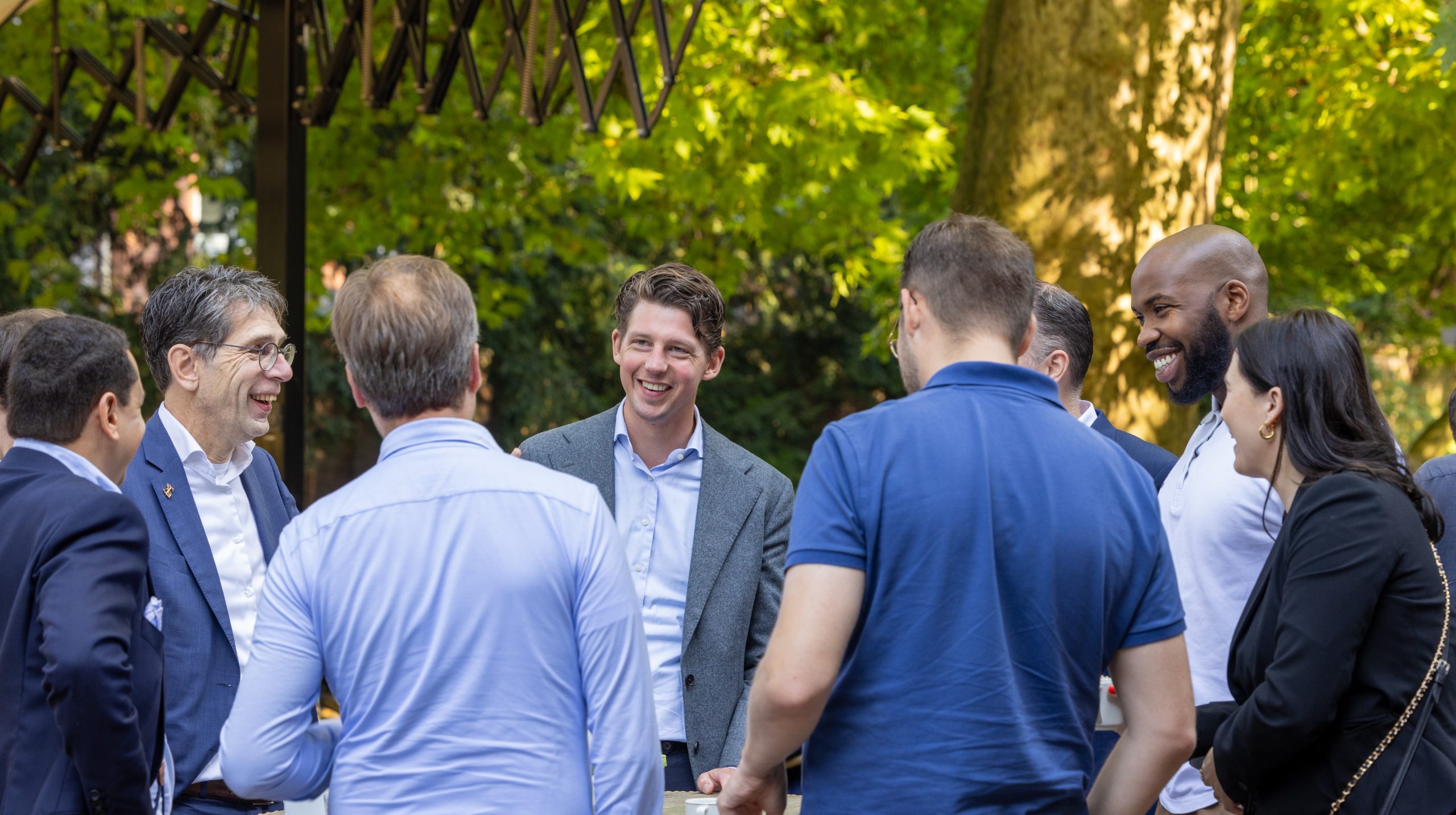
Tom: I would describe the culture at Main as ambitious and high-energy, that’s really what defines it. From day one, you feel that everyone is driven, eager to learn, and pushing to get the most out of themselves. If you ask for more responsibility and work, you’ll definitely get it. At the same time, it’s a very hands-on and open environment. The structure is relatively flat in terms of communication, but with clear seniority in responsibilities and decision-making. I share a room with a Director, Investment Manager and Associate, so the lines are short and you’re constantly learning just by being around each other. Every Monday at 8:30, we kick off the week with the deal team, reviewing priorities and new opportunities, which really sets the tone for the rest of the week. It’s a professional setting, we’re based in a beautiful historic building in the centre of The Hague and suits are part of the day-to-day, but there’s also room for some lighter moments: “monthly drinks, a summer barbecue in Scheveningen, padel tournaments, a Friday drink whenever you feel like one, and a two-day offsite each year where everyone, including the US team, flies in.”

Software businesses have been hit hard on the public markets by the rise of AI. How does Main look at that?

Tom: AI is definitely topic number one for us. It initially created quite some pressure on public software markets, but we look at it differently. The companies we invest in are typically enterprise software businesses that are deeply embedded in their customers’ workflows as a system of record, meaning they sit at the core of the organization’s data and workflows. That’s a structurally strong position. It’s not something you can easily replace with a standalone AI tool, as the data, integrations, and business-critical workflows remain essential. If anything, AI tends to build on top of that foundation rather than replace it. For every new investment, we run an AI assessment, looking at whether a company has the right data position and is well positioned both to benefit from AI and to be resilient against potential AI disruption. In addition, we have a dedicated Product, Tech & AI team within Performance Excellence, working closely with management teams on concrete AI initiatives, both to optimize internal processes and to embed AI into the product offering. So we genuinely see AI more as an opportunity than a threat, but it does require staying very close to developments, as the space is evolving quickly.

In closing, what do you think sets Main apart, what are your personal ambitions for the coming years, and what would you tell students who want to follow this path?

Tom: What really sets Main apart is its sector focus. We’ve been investing exclusively in B2B enterprise software for over 20 years, which has resulted in a very deep level of market knowledge, a network of 15,000+ software companies globally, and the ability to move with conviction and speed. That combination is also reflected in the track record, Main has been recognized as one of the top-performing and most consistent PE fund managers in Europe, and is among the most active software investors. Personally, my ambition is to continue growing within the firm. Over the past 18 months, the focus has been on building a strong analytical foundation and learning to develop investment cases the Main way, structured and rigorous. Going forward, I aim to further strengthen the commercial side, take increasing ownership in transactions, and progress towards an Associate role. I’d also like to contribute to mentoring newer analysts as I progress. For students looking to break into private equity, I’d strongly recommend attending in-house days. It’s one of the best ways to really understand different firms and figure out where you fit, well before you start applying. And don’t underestimate the M&A internship route, that’s where you build the technical foundation you’ll rely on throughout your career.

Opportunities at Main Capital Partners

When joining Main as a full-time Analyst, you’re paired with a buddy from day one, an Investment Manager or above, with whom you sit down weekly to reflect on the past week, plan ahead, and flag any problems you run into. The firm also runs an extensive internal training programme covering the full PE process: portfolio management, banking and finance, deal structuring, deal execution, and legal, taught by Main’s own Investment Managers and Directors, sharing real hands-on experience.

The type of starters Main looks for is fairly clear: a genuine interest in PE, ambition, and a strong willingness to learn. Strong analytical skills are the foundation, but being able to apply them in practice is what sets you apart. On top of that, Main values people who are proactive, entrepreneurial, structured, and detail-oriented. The work is high-paced, with short deadlines and high expectations where you’re expected to deliver. And maybe most importantly, you need to be a strong communicator, as from day one you’ll be in meetings with experienced CEOs and CFOs.

Main currently has Business Analyst positions open in six countries, including the Netherlands and Belgium. Check out the current openings on our vacancies page.

Read our latest articles

Subscribe to our newsletter

This field is for validation purposes and should be left unchanged.
Name(Required)

Sophia Hengelbrok