
5 Private Equity Trends Shaping 2026
By Charly Zwemstra, Managing Partner & Chief Investment Officer, and Jorn de Ruijter, Partner and Head of Fund Structuring & Investor Relations at Main Capital Partners
As we enter 2026, private equity finds itself at an inflection point.
A decade defined by abundant liquidity and supportive macroeconomic tailwinds has given way to a more demanding environment – marked by higher capital costs, intensified competition, and rising expectations from limited partners. In this new reality, success will no longer be driven by scale alone, but by clarity of strategy, depth of expertise, and disciplined execution.
At Main Capital Partners, we believe the coming years will increasingly separate firms with a forward-looking approach from those reliant on past momentum. In this article, we outline five trends that we believe will shape private equity performance in 2026 and beyond.
Private equity has matured into a more competitive asset class. In the current crowded landscape, differentiation has become both harder and more critical. In this environment, deep specialization is no longer optional – it is a critical driver for long-term performance, as confirmed by research from Gottschalg Analytics. According to Professor Oliver Gottschalg, specialized firms are now challenging the traditional dominance of US‑based counterparts, particularly in the mid‑market (HEC Paris).
Specialized investors benefit from three structural advantages. First, deep market knowledge enables faster and more informed decision-making. Specialists instinctively understand industry dynamics, competitive positioning, and value-creation levers, allowing them to act decisively where generalists hesitate. Second, accumulated experience translates into refined, repeatable playbooks tailored to specific markets and business models. Third, credibility with founders and management teams increasingly depends on relevance and insight, not just capital.
At Main Capital Partners, our exclusive focus on Enterprise Software allows us to successfully combine speed with capability. This was demonstrated recently in our acquisition of IQ Messenger, where deep sector expertise enabled us to complete diligence and negotiate the transaction in under a week. As competition intensifies, these advantages will only grow in importance.
Alongside specialization, strategic focus will be a defining factor in long-term performance. The industry has recently seen a proliferation of strategies – from credit and secondaries to GP stakes and hybrid vehicles. While diversification can have its merits, it also introduces complexity and, often, a dilution of effectiveness.
We increasingly observe large, historically successful managers expanding their platforms by leveraging brand strength rather than expertise. As scopes widen, attention can potentially shift from generating outsized returns to maximizing assets under management. Over time, this could erode alignment with LPs, as fee income becomes more dependent on asset gathering than performance.
Looking ahead, we believe LPs will become more discerning – favoring managers whose current performance reflects the same focus and excellence that originally built their reputations. Unlike the widespread diversification of strategies currently seen in the industry, Main Capital has maintained a steady approach. For over two decades, our concentration has been on lower mid-market software firms, striving for strong outcomes for our stakeholders as well as the companies in which we invest. Building sizable, differentiated international software groups provides benefits for all stakeholders, including society as a whole.

The true test of a private equity strategy is not entry, but exit.”
The true test of a private equity strategy is not entry, but exit. For many years, favorable macroeconomic conditions – most notably a prolonged low-interest-rate environment – masked differences in manager quality. Rising valuations enabled even average performers to deliver acceptable returns.
That era has ended. Today’s environment is more challenging: financing costs are higher, buyer universes are more selective, and valuation expectations have reset. As a result, many GPs are delaying exits, extending holding periods in the hope of a more accommodating market.
By contrast, top-tier managers distinguish themselves in these conditions by generating liquidity and delivering outcomes across challenging cycles. Over time, this renewed emphasis on exit discipline will strengthen the industry, rewarding genuine value creation while exposing strategies that relied too heavily on multiple expansion and financial engineering.
Discussions around Enterprise Software often default to the United States. While the US remains an important market, this focus overlooks a highly compelling opportunity across the Atlantic.
Europe’s Enterprise Software ecosystem combines stable operating fundamentals with structural inefficiencies that are ideally suited to specialist private equity. The market is large, deeply fragmented, and still undercapitalized – offering attractive entry valuations and significant scope for professionalization and consolidation. Regulatory and geopolitical developments increasingly favor local champions, further strengthening the investment case.
According to our recently published whitepaper, the European mid-market comprises approximately 35,000 active software companies – significantly more than the roughly 20,000 identified in the United States. Despite this, Europe attracts a disproportionately small share of institutional capital. As investors recalibrate their global strategies, this imbalance is beginning to correct, creating a compelling risk-adjusted opportunity for those with the right capabilities.
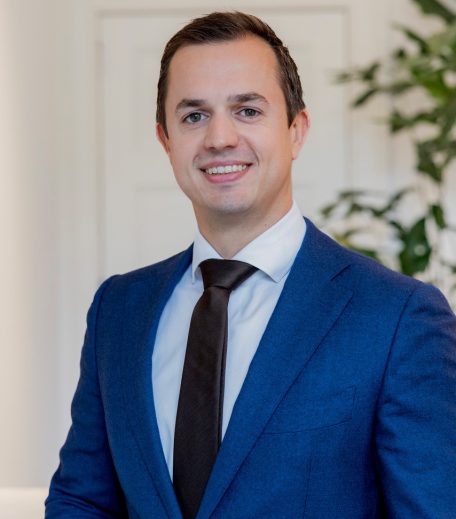
Dealmaking depends on trust, context, and a deep understanding of who sits on the other side of the table."
In an increasingly competitive market, differentiation is often found in proximity. Just as sector expertise matters, so too does local presence. Markets differ significantly in culture, regulation, and business practices, and these nuances cannot be fully understood through a fly-in, fly-out approach.
Dealmaking, after all, is not purely a financial exercise. It depends on trust, context, and a deep understanding of who sits on the other side of the table – their motivations, constraints, and long-term ambitions. These factors cannot be fully appreciated without genuine insight into the local environments in which entrepreneurs and management teams operate.
Our strategic presence in The Hague, Düsseldorf, Stockholm, Antwerp, Paris, an affiliated office in Boston, and an upcoming location in London, enables us to act as a truly local partner across regions, embedded in the ecosystems in which we invest.
Local execution, however, is most powerful when combined with international reach. The most effective firms pair deep regional roots with the ability to scale businesses globally. Our cross-border approach allows us to support portfolio companies throughout their international growth journey, while remaining closely aligned with local market realities.
We believe that global software markets reward investors who can master both a credible local presence and international scaling capability simultaneously. In Enterprise Software, value creation does not come from choosing between specialization and localization, but from integrating both seamlessly across geographies.
Main Capital Partners is built around this conviction. With an exclusive focus on Enterprise Software, deeply embedded local teams across Europe and the United States, and extensive data-driven sector expertise, we systematically identify local champions and support their evolution into international leaders. Rather than applying generic playbooks, we tailor our approach to the realities of each market, while leveraging our international platform to accelerate growth and professionalization.
In our opinion, the future outperformance of GPs will be based on direct, specialized strategies, fueled by Continuation Vehicles to compound successful strategies and financial returns.
As private equity enters a more selective phase, we believe this combination of focus, specialization, local execution, and global scale will define the next generation of top-performing managers – and continue to deliver consistent, long-term value for our partners.
Nothing contained in this article is intended to project, predict, guarantee, or forecast the future performance of any investment. This article is for information purposes only and is not investment advice or an offer to buy or sell any securities or to invest in any funds or other investment vehicles managed by Main Capital Partners or any other person.

Privacy management has become a central priority on the global agenda, increasingly shaping boardroom conversations and making headlines around the world. TrustArc, a US-based privacy and AI risk management software innovator, supports enterprises in navigating the complex world of privacy by streamlining compliance processes and adapting to rapidly evolving regulations.

At first glance, elite sport and private equity may seem worlds apart. Yet at their core, both are driven by the same principles: ambition, collaboration, discipline, and performance.
In this interview series, players from the Hockey Club Klein Zwitserland (HCKZ), share their perspective on teamwork, resilience, and personal growth. Their stories offer insight into what it takes to perform at a high level, on and off the hockey field.

At first glance, elite sport and private equity may seem worlds apart. Yet at their core, both are driven by the same principles: ambition, collaboration, discipline, and performance.
In this interview series, players from the Hockey Club Klein Zwitserland (HCKZ), share their perspective on teamwork, resilience, and personal growth. Their stories offer insight into what it takes to perform at a high level, on and off the hockey field.

In our Working at Main series, we highlight the people behind Main Capital Partners and explore their professional journeys, motivations, and day-to-day experiences. This time, we spoke with Ferdinand Obenheimer, Investment Manager on Main’s US team.

At the Main Software 50 DACH 2025 event, leaders from across the software industry converged around a shared theme: digital trust, security, and infrastructural sovereignty have become decisive factors for long-term economic resilience and competitiveness.
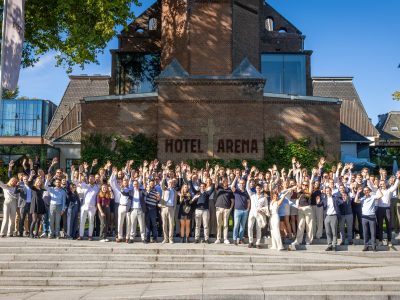
Between 18th and 19th September, Main organized the annual Main Offsite Days at Hotel Arena in Amsterdam, the Netherlands.